

Matteo Gennari. A Man in motion.
In 1913, the artist Umberto Boccioni created the work Man in Motion. A futuristic figure that crosses space, advances, progresses, evolves. A representation that could well be that of Matteo Gennari. A man in motion. First, in his gestures. From the very first words, one understands that he is Italian: the laughter, the expansive movements, the extreme conviviality. An interest in others that might be mistaken for naïveté, but is in fact nothing more than sincere warmth and good nature.
Then, motion in art, an environment in which he has always moved. And above all in architecture, for which he very early developed a genuine passion. Architecture as the genius of place—the place where one lives. It is therefore no surprise that he trained at the prestigious Polytechnic University of Milan, from which he graduated. A renowned institution that allowed him to refine his appetite for the arts. From the 1990s onward, taking full advantage of Milan’s cultural life, he mingled with figures from fashion, photography, and design more broadly. An eclectic and rich universe that fueled his creativity. Raised in a family that always placed culture at the heart of education, he explored numerous artistic forms—from drawing to cinema, including graffiti—before becoming an architect in the broadest and noblest sense of the term.
An experience that gives him another perspective on his work, which he enjoys approaching from multiple angles. The search for novelty and knowledge: once again, a path in motion. Milanese at heart, Matteo Gennari punctuates his career with many journeys abroad. To London, where he goes just after obtaining his maturità, to explore a bohemian life outside the family cocoon and its traditions. To Milan, where he begins his studies, but also to Bordeaux, where he continues with an Erasmus program. A human adventure that allows him, on the corner of a restaurant table, to sketch his very first façade for a passerby… who would become his first client. This marks the beginning of many other journeys: Turkey, Spain, Mexico, Portugal, Belgium, the United States, Indonesia—countries whose histories he explores with a thirst for knowledge and exchange. A polyglot, he enjoys immersing himself in different cultures, whose nuances and rough edges he delights in recounting. And finally, it is in Nice—where his parents used to take him on summer holidays to the family apartment—that he eventually settles. The beginning of a professional life… always in motion.
Eager to integrate into local life, he devotes himself to an activity that allows him to evolve within a vibrant artistic universe: skateboarding. For several years, his practice of this discipline is far from incidental. Moving forward on the board allows him to see the city as a flowing sequence. Slower than a bicycle, never static like walking, skateboarding offers a gentle, continuous vision of the spaces one moves through. The body becomes a camera, capturing every detail of the surrounding world. A posture that is anything but natural, requiring effort and perseverance, yet yielding deeply satisfying results. A pleasure he finds again in other sports, such as surfing, which he practices during his studies in southwestern France. In Lacanau or Biarritz, he enjoys moving across water whose motion must be embraced in order to progress. A discipline that demands patience and endurance—sometimes thankless, yet capable of delivering moments of extreme exhilaration. Skateboarding, surfing… and finally golf, the ultimate sport of patience, where effort is sometimes hard to measure, yet whose practice closely resembles that of the architect’s craft. Drawing a line in space. Creating a trajectory with the body. Giving meaning… to movement.
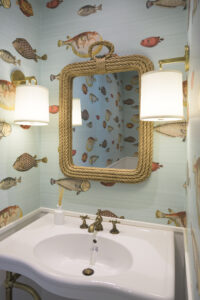
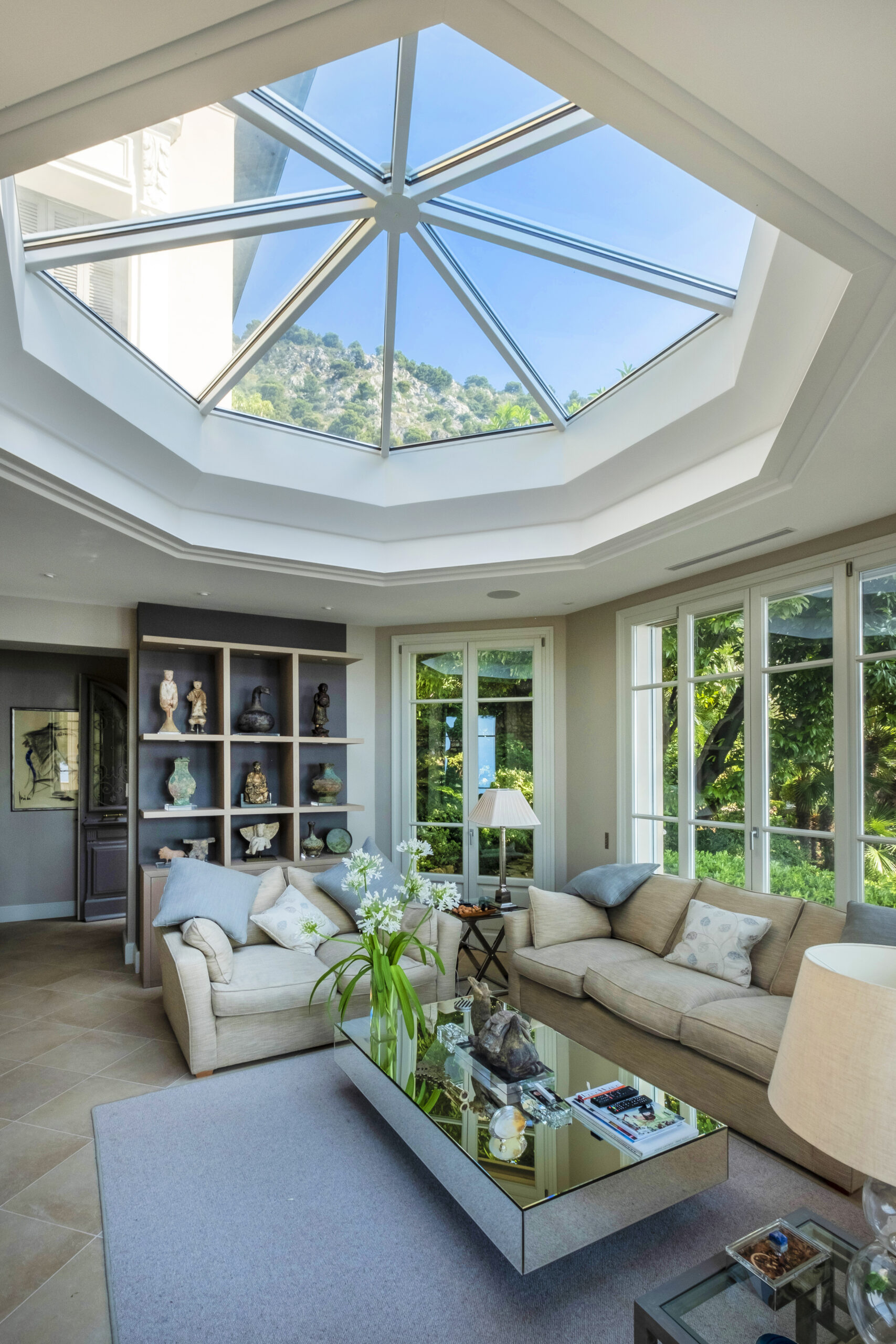
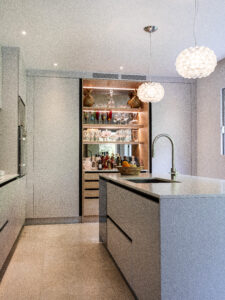
A relationship between body and space that Matteo Gennari translates into the places he designs. In his work, there is first and foremost that of the architect. Rooms are organized according to passages and corridors that follow a logic of circulation—of people, of course, but also of light. Contrasts of shadow and illumination, the famous chiaroscuro of Caravaggio, punctuate volumes and give them life. Everything is thus in motion, because everything lives. More than an architect, Matteo Gennari also becomes an interior architect. He studies the movements of his clients and adapts to their intimacy. He is therefore constantly concerned with making spaces beautiful and comfortable, elegant and functional, aesthetic and personal. In the bedroom, a hidden space for a safe; a small piece of furniture to enjoy the first coffee upon waking; or, the height of refinement, an area entirely dedicated to scarves and ties. Every room is conceived so that people may live comfortably within it—from the office to the kitchen, including the fitness room. The creation of furniture and layouts that follow the movement of the body.

Better still, that serve the body. Indeed, it is in the manner of a couturier that Matteo Gennari fashions the houses and spaces he designs. He favors materials whose inherent nobility he enhances. Having learned from his father that the drape of a fine fabric can make the body more beautiful, he selects materials with the same exacting standards. Thus, the choice of a color—down to its subtlest nuances—can render a piece of furniture more beautiful, deeper, more alive. Matter shaped so that form is both beautiful and useful, like this coffee table with edges rounded enough to avoid injury and high enough to hold a coffee tray. Like a couturier, Matteo Gennari works with proportions, functionality, and aesthetics. He masters the fundamentals while remaining firmly rooted in his time. Respect for tradition, certainly—but with a modern, contemporary vision. A dynamic that renews itself endlessly. Thus, when fashion designer Pierre Balmain declared that “the making of clothes is the architecture of movement,” Matteo Gennari, by “tailoring” his houses as he likes to say, in turn becomes a couturier of movement.
Enjoy even more @Matteo Gennari

Edit by @Sophie Girone
Editor @ Monaco Woman