

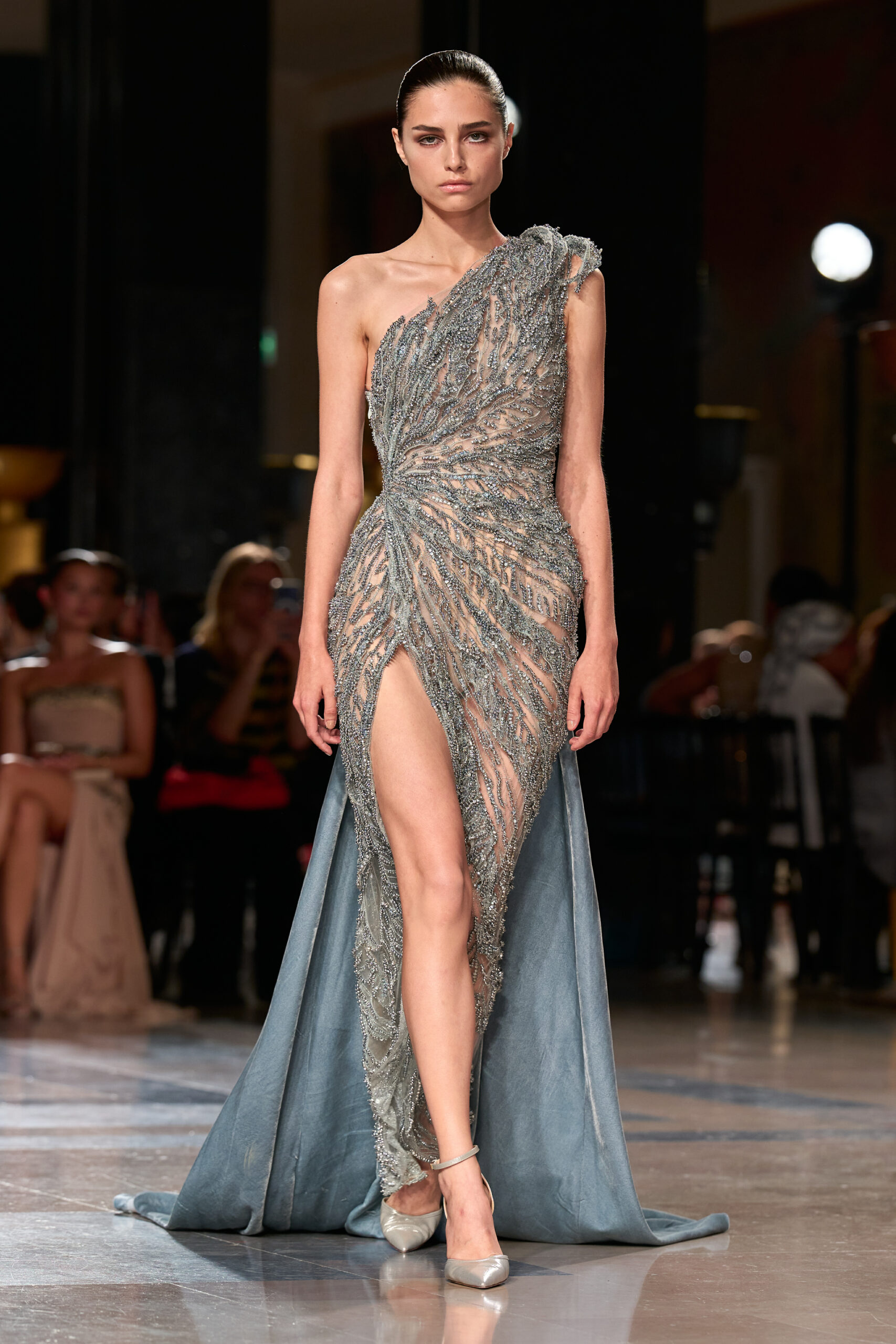
Paris Haute Couture Week Fall/Winter 2026–2027
Everything starts in Paris. Haute Couture Week laid the foundations of the modern fashion system long before ready-to-wear and today’s global fashion calendar. More than a series of runway shows, it remains fashion’s most prestigious stage, where craftsmanship, creativity and innovation come together in their purest form.
This season, couture moved beyond the boundaries of traditional elegance, embracing a more imaginative and expressive vision. Designers explored volume, movement and sculptural forms, turning each garment into a statement of creativity and craftsmanship.
In a world increasingly influenced by artificial intelligence and digital innovation, haute couture remains a celebration of human skill. Behind every creation are les petites mains, the master artisans whose exceptional techniques, patience and dedication can require hundreds of hours of work for a single piece. It is this unique heritage, passed from one generation to the next, that continues to make couture unlike anything else in fashion.
Schiaparelli
Paris Haute Couture Week opened with Schiaparelli, where Daniel Roseberry once again presented his unmistakable surrealist vision. Season after season, the maison continues to surprise with a language that moves beyond traditional couture, creating a dialogue between fashion, art and imagination.
This season, the impact came from the contrast between light and material: illuminated silhouettes and luminous details were set against sculptural creations made from industrial materials such as silicone and latex. Moulded into organic, almost otherworldly forms, these elements transformed the body into a surreal expression of contemporary couture.
These were not simply garments decorated with surrealist motifs; they presented couture as a form of speculative anatomy. The collection suggested that the true luxury of couture lies in its ability to imagine new possibilities for the human form.
At Schiaparelli, the unexpected becomes extraordinary, proving once again that creativity remains the true essence of haute couture.
Chanel
In his second Haute Couture show since taking the helm at Chanel, Matthieu Blazy continued to develop a dreamlike universe.
The world of fairy tales came to life through playful yet sophisticated details: references to characters such as Goldilocks, Puss in Boots and The Ugly Duckling were transformed into couture elements, from embroidered fabrics and whimsical buttons to accessories filled with imagination. Fairy-tale references emerged even in the smallest details, with fantastical characters concealed within the sculptural heels of the shoes, which remain among Blazy’s most distinctive accessories.
Blazy’s Chanel was not a return to childhood, but a celebration of the freedom and imagination that fairy tales represent. A couture world where fantasy meets craftsmanship, always designed for the modern woman.
Balenciaga
One of the defining moments of the couture season was Pierpaolo Piccioli’s debut at Balenciaga. For his first Haute Couture collection for the maison, the designer placed the human element at the centre of his vision, highlighting the time, dedication and passion of the artisans behind every creation.
Piccioli approached Balenciaga’s heritage with respect, studying the legacy of Cristóbal Balenciaga while translating it through his own creative language. The collection reflected the house’s iconic relationship with volume, structure and architectural silhouettes, introducing a new sense of emotion through an intense and vibrant colour palette.
The result was a balance between coolness and couture: a dialogue between the discipline of Balenciaga’s history and Piccioli’s expressive vision. Accompanied by Lou Reed’s Perfect Day, the show celebrated couture as something deeply human—created not only through technique, but through passion, collaboration and love.
With this first couture collection, Piccioli did not attempt to recreate Balenciaga’s past, but to continue its legacy through a contemporary perspective.
Elie Saab
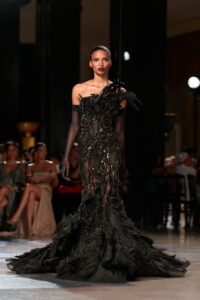
With Ball of Untamed Dreams, Elie Saab presented a collection where glamour met fantasy, transforming haute couture into a world of mystery and imagination. Remaining true to the maison’s signature style, the designer once again demonstrated his remarkable ability to enhance the female silhouette through exceptional tailoring, intricate embroidery, delicate lace and luminous fabrics. Every look embraced the body with fluid, sculptural lines, celebrating the craftsmanship that has always defined Elie Saab’s couture.
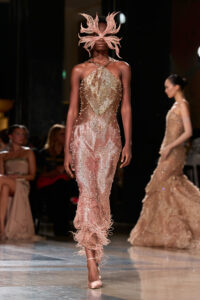
One of the collection’s most distinctive elements was the series of sculptural masks, appearing throughout the show in different forms and reinforcing the atmosphere of an enchanted masked ball. Some delicately framed the face, while others partially concealed it, adding mystery without distracting from the elegance of the garments. The theatrical narrative reached one of its most memorable moments with a dramatic feathered headpiece shaped like a majestic black swan, creating one of the runway’s most striking images.
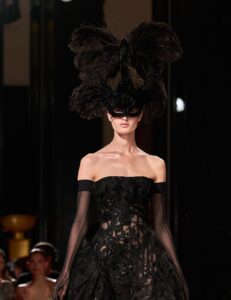
Balancing ethereal femininity with dramatic theatricality, the collection moved effortlessly between flowing pastel gowns and sculptural silhouettes in rich, darker tones. Draped fabrics, intricate embroidery and organic forms transformed each look into a dreamlike interpretation of nature, where couture blurred the boundaries between reality and fantasy.
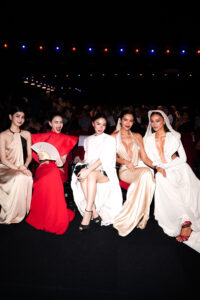
Stéphane Rolland
For his Haute Couture Fall/Winter 2026–2027 collection, Stéphane Rolland paid tribute to Dalida, the iconic French singer whose life embodied strength, vulnerability and reinvention. Inspired by her legendary return to the stage at the Olympia Hall, the designer explored the emotional connection between a woman and the clothes she wears.
Presented almost entirely in white, the collection reflected Rolland’s signature approach to purity, sculptural silhouettes and precise construction. The absence of colour placed the focus on form, craftsmanship and the presence of the woman herself, allowing each creation to reveal rather than overshadow her identity.
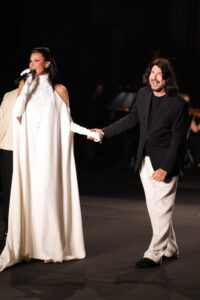
The designer’s mastery of structure was expressed through the use of gazar, a fabric historically created for Cristóbal Balenciaga. Having begun his career at Balenciaga at just 21 years old—becoming the youngest artistic director ever appointed to the Parisian house—Rolland developed a profound understanding of volume, precision and the architectural language of couture.
Precious embroidery, crafted with crystals, amethysts and quartz, introduced subtle reflections of light across the garments, enhancing movement and radiance. Through purity, structure and emotion, Rolland reaffirmed his vision of couture as a celebration of the woman rather than the garment itself: the woman must always come before the dress.
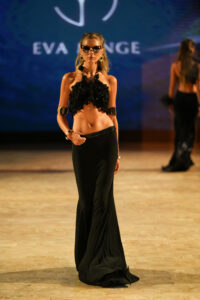
Eva Minge x Esotiq
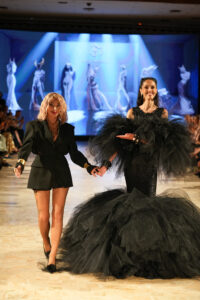
During Paris Haute Couture Week, Polish designer Eva Minge returned to the Paris runway after eight years with a special presentation created in partnership with Esotiq. Presented outside the official Haute Couture calendar, the show took the form of an artistic performance where fashion, movement and storytelling came together.
Titled Seven Contemporary Sins, the presentation explored the values and emotions that can be lost in modern society. Through a combination of fashion and choreography, Minge created a visual narrative centred on femininity, freedom and self-expression.
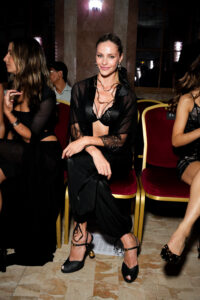
The collection combined the sensuality of lingerie with the structure and elegance of couture. Monochromatic silhouettes highlighted the female body through handcrafted details, sculpted textures, fine silk and French lace. The pieces, created with the expertise of skilled artisans, transformed lingerie into a sophisticated expression of contemporary femininity.
Developed in collaboration with Esotiq, the collection gave lingerie a new dimension, moving beyond intimacy and becoming part of a wider fashion statement. Through embroidery, satin finishes, lace details and elegant silhouettes, Minge explored the relationship between confidence, sensuality and empowerment.
Paris Haute Couture Week Fall/Winter 2026–2027 once again demonstrated that couture remains one of fashion’s most powerful forms of expression. From surrealism and experimentation to craftsmanship, heritage and emotional storytelling, each maison presented a unique vision of what couture can represent today.
Despite the constant evolution of fashion and technology, haute couture continues to celebrate the human touch behind every creation. It is this combination of imagination, savoir-faire and dedication that allows couture to remain timeless.
Enjoy even more @Haute Couture Week

Edited by @Aldy Gdowska Przylipiak de Cappadocia
Photo Credits: Stephan Rolland & Eva Minge Photo by Mateusz Pielesz
Editor @Monaco Woman