The French Art of Living, Explained by Luxury Sociologist Alessandra Violet Vianello
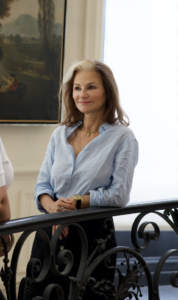
Alessandra Violet Vianello Sociologist, writer and consultant to luxury companies
Who truly stands behind the success of a great luxury company or a haute couture maison? Who supports creative directors when the pressure of hyper-production threatens to suffocate inspiration, when creativity must bend to, or negotiate with, the laws of finance? And who accompanies the great CEOs of the luxury world, figures of strong and fierceful leadership, during the most delicate moments of decision-making, transitions and inevitable human fractures?
Behind the lights of the catwalks and the dizzying figures of financial reports lies a discreet, often invisible form of work concerned with a profound understanding of human nature. It is precisely here that the path of Alessandra Violet Vianello unfolds: a sociologist and consultant to major luxury groups, creatives and top managers, born in Venice but based in Paris for many years.
Her role is to “translate” between worlds that speak different languages: the symbolic universesof creation and the rational one of business; personal identity and professional function; visionand performance; and of course the evolving profiles of clients and the ambitions of a brand.
In this interview, Alessandra Violet Vianello explains how luxury has become an extraordinary sociological laboratory, capable of anticipating cultural, social and even existential transformations. A conversation that moves through fashion, leadership, coaching and the art of living, exploring what it means today to remain aligned with oneself within a system that demands absolute perfection, speed and immediate results.
How did your passion for sociology and the study of human beings begin?
My background lies in the humanities. I studied foreign literatures, semiotics, linguistics, communication sciences and, naturally, sociology as well. I often say that I am a sociologist, for the sake of simplicity, but in reality I strongly believe in a broader education that approaches the understanding of human beings from different perspectives.
So not only sociology, but literature as well: the way human beings are narrated, studied and interpreted across different eras and cultures. At the root of everything lies a personal love for a fundamental question: understanding why people do what they do.
How did your connection with the world of luxury, fashion and creativity develop?
Today my work consists of accompanying large corporate groups and individuals (managers, entrepreneurs or even young people at the beginning of their careers) to develop their personalmeaning to what they do. A meaning that is not merely professional but also existential.
I often speak about a “double life”: the professional one and the personal one, which ideally should mirror one another and remain aligned. When this does not happen, a fracture emerges, almost like an hernia, a point where something stops functioning. Hence the importance of being aligned.
Why did you choose to work in the world of luxury?
Because luxury is an extraordinary sociological laboratory. It entered my life almost by chance, yet immediately revealed itself as an exceptional field of observation, almost as « theatre ». It is a highly codified world, dense with symbols and extremely theatrical. In a sense, not always, but very often, major sociological transformations are first staged within the world of luxury, or at least confronted there before filtering into the rest of society.
Can you give some examples of these changes?
If we look at some of the latest fashion collections presented in Paris in the first quarter of 2026, I am thinking of Chanel, Schiaparelli and Dior, one element emerges strongly: the radical return of detail.
Haute couture has always had a deeply artisanal dimension, a savoir-faire pushed almost to the sublime extreme. Yet in these most recent collections, detail is placed at the centre in a new way, almost to the detriment of the overall design of the garment that stays essential, clean, understated. It is as if the detail must speak for itself, emerging as the true protagonist.
This is something whose first signs we are beginning to see in everyday life as well: a return to the interest for craftsmanship, to how things are made, to an understanding of materials and processes. A rediscovery of aesthetics understood not as surface but as construction. And, not by chance, today this need is exploding precisely on the catwalks.
Has luxury anticipated profound social transformations in the past as well?
Absolutely. If we go back quite far, we can think, of an example we all remember easily, the dialogue between masculine and feminine identities. This was brought to its peak by great creators such as Yves Saint Laurent, who powerfully staged this dual male–female identity.
Only afterwards was this language absorbed and integrated by the rest of society. It is a continuous play of mirrors: great creators observe the world, but they do so with a sensitivity that allows them to grasp tensions, fractures and unspoken desires earlier than others.
They stage them, often in dazzling ways, helping us understand how certain phenomena may evolve and eventually become part of everyday life.
From a managerial perspective, what does it mean to work in luxury today?
Here the complexity increases even further. Luxury is a brutal environment, in the most literal sense of the word: everything must be perfect.
It is precisely there that one realises that, as a manager at any level, one can probably control almost everything except oneself. Even great CEOs, most likely, come up against this limit.
Today we see an impressive turnover of creative directors in fashion. How do you interpret this?
It is a very evident phenomenon. Creative freedom is sometimes canalised, and the direction can be dictated by commercial logic and financial departments.
I am thinking, for example, of talented young designers who are asked to produce almost industrially. We are talking about an enormous number of collections every year. They must maintain a creative vision while at the same time obeying extremely rigid rules, because garments must sell and companies must generate revenue.
It is precisely at this point of friction that I come into play: helping these individuals navigate extremely difficult waters and find meaning and alignment without completely losing themselves along the way.
What do you concretely do in your work ?
I work as a “translator”. I try to translate commercial needs for creatives and, at the same time, the language and needs of creatives for the commercial world, without ever diminishing either side. Very often a creative person has their own vocabulary, specific rhythms, a personal way of producing and, above all, legitimate strategies for protecting their creativity. Yet none of this is always immediately understandable for a commercial department, which has different priorities, timeframes and codes.
My work consists precisely in helping each side accept the needs of the other. As they are both equally important. Translation means adapting the message in language, in gestures and sometimes even in the final output, so that what one intends to communicate is truly understood by the other.
What happens when you work alongside the CEO or the owner of a major luxury maison?
These are individuals who often identify 300 per cent with their work. Their main difficulty is managing to preserve a dimension of their self humanity.
The question they ask themselves is simple but fundamental: how can I avoid cutting myself off completely from the real world?
What have been the main obstacles when working with top figures such as CEOs or major owners?
The first major obstacle is omnipotence. These individuals believe they already have all the answers. Even when they ask a question, they do not truly believe they do not know the solution.
They can also be remarkably impermeable. It is an interesting paradox: they come asking for guidance because they perceive a problem, yet it becomes extremely difficult to overcome the barrier of “I already know”.
Phrases such as “I’ve already been through that”, “I’ve tried everything”, “I’m not like that” or “I would never say something like that” are commonplace. Great personalities therefore raise great questions.
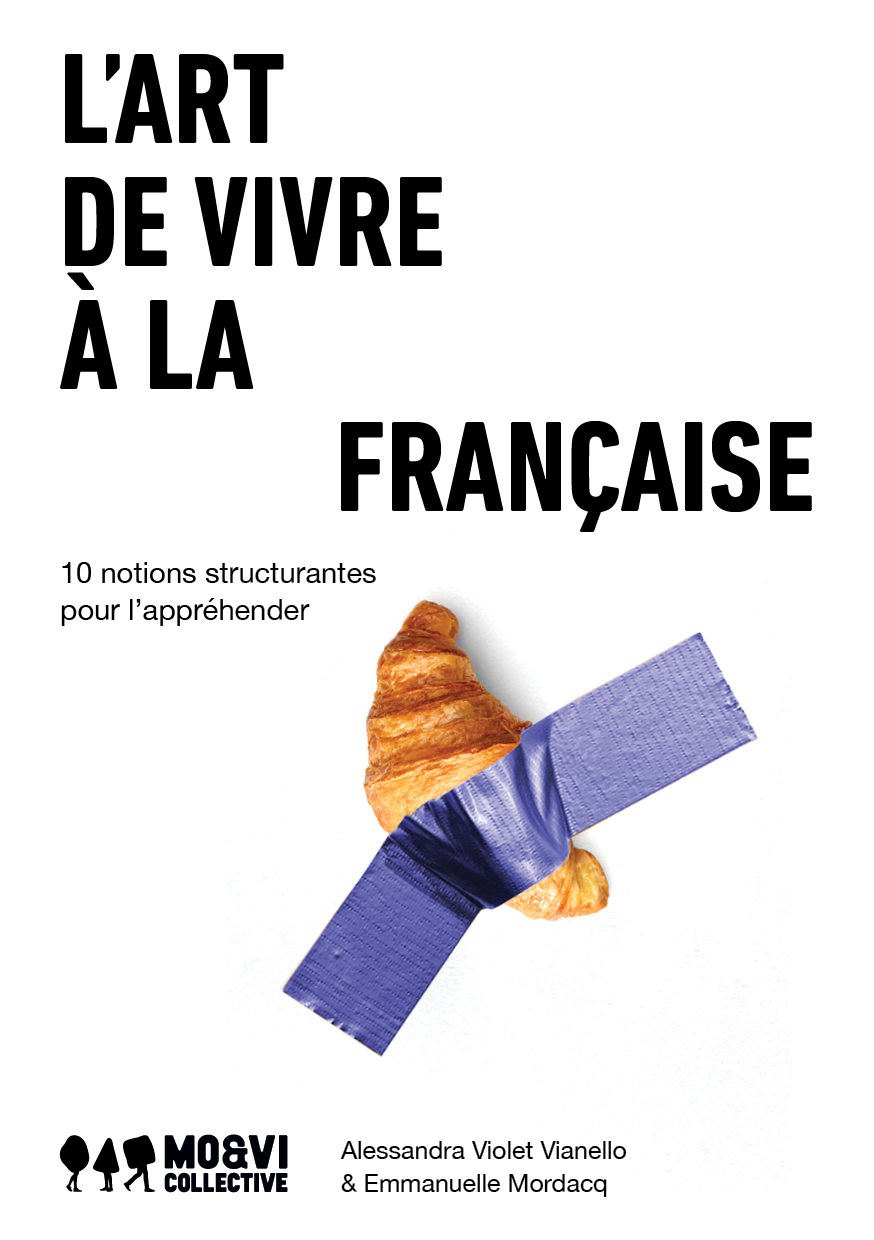
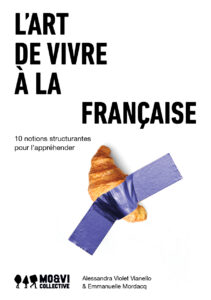
You wrote a book entitled L’Art de vivre à la française. What is the essence of this art of living?
Yes, it was co-written with a colleague and friend, Emmanuelle Mordacq. Both of us work for major French companies that gravitate around the idea of art de vivre.
As far as I am concerned, the idea also comes from the fact that I am an Italian born writing about the French art of living, therefore from an inevitably external perspective.
Since I was 18 years old, when I began living in France, I wondered why the French had a different approach. I fell in love with their way of structuring life.
The French love rules, frameworks and structure; for them this is something fundamental. At first this can seem like a limitation, because structure can stiffen things and make everything more rigid or even sterile. But I realised very quickly that it also provides an enormous sense of freedom.
Paradoxically, it is precisely this structure that becomes a springboard for creativity and gives it deep meaning. Creativity needs a perimeter in order to express itself with a meaning and impact.
It is like classical ballet: the rules are clear, the steps are codified, the foundation is the same for everyone. Yet within that framework interpretation, freedom and the possibility of creating something new from immutable elements blossom.
And what are the pillars of this art of living?
In the book we identified ten, but two are fundamental. The first is freedom within structure. One must know the rules, understand how things function, and only then interpret them freely. The second is what we called «the stroll of the eye »: the ability to recognise what is essential by observing what exists elsewhere.
A beautiful example is the Hall of Mirrors at Versailles. Louis XIV was inspired by Venetian masters of glass and mirrors. He did not copy them. He interpreted them and created something that could not even have existed in Venice: a gallery of mirrors of unprecedented scale. That is the eye taking a stroll.
From a sociological perspective, what do you see as the limitation of the French art of living today?
The main limitation is that some people stop at the formal side of the French art de vivre.
They believe that incarnating the French art de vivre means respecting certain external rules,speaking a certain kind of French, using the formal « vous » rather than the “tu » , following etiquette and protocols.
But they forget that France is also a nation of rebels and revolutionaries. We cut off the king’s head… and then crown others afterwards because thinks change and evolve.
Looking towards the future, which social and cultural trends do you consider most interesting?
One concerns the courage of imperfection, learning to accept it and even value it.
Today imperfection is almost a taboo word. In large corporations, if something is imperfect the instinct is immediately to correct it.
Yet imperfection, small cracks can become a driver of creativity. It opens new spirals where previously everything had become rigid.
Another important trend is the art of conversation. We speak a great deal, but we listen very little.True listening means understanding why the other person says, which specific words they choose and which implicit messages they convey.
Do companies today need more philosophy and less Excel?
Totally ! I say it often. My work as a sociologist and coach is based on extremely simple questions with very complex answers. Questions such as: Why do you get up in the morning? Why do you do this job? They appear simple, but the answer goes far beyond the banal explanation that we work simply in order to survive. We should ask ourselves these questions every day…children’s questions, or perhaps great sages questions.
Sometimes people consider those questions at seventy or seventy-five, and they suddenly decide to change everything and become a yoga teacher in the Maldives.
Those may be extreme answers, but they reveal a deep human need: the need to realign what we do with who we truly are.
L’Art de vivre à la française, by Alessandra Violet Vianello and Emmanuelle Mordacq, is available online www.movi-collective.com
Edit by @Stefania Conrieri
Editor @Monaco Woman